Stainless Steel vs. Nylon: Why Snakebite™ cuts cleaner through thick liners
Updated: Sep 3
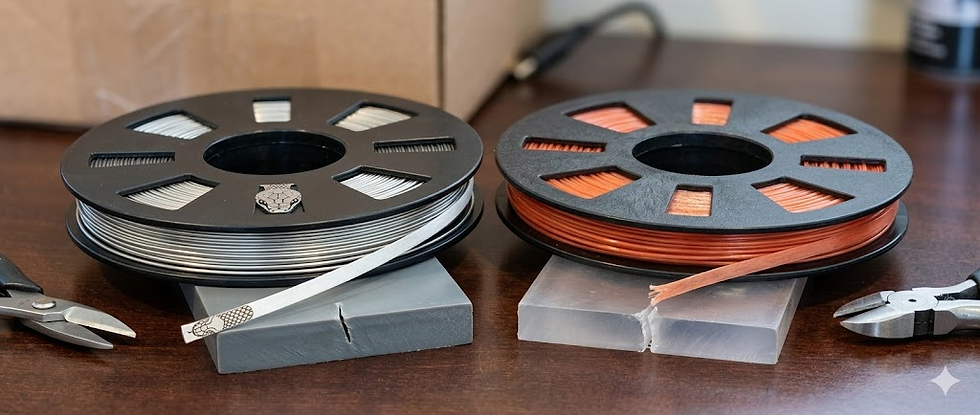
The comparison of stainless steel vs. nylon masking tape comes down to cutting control, tensile strength, and how the cutting element behaves under pressure. Thick liners can be tough, elastic, and uneven. If the cutting element stretches too much or loses direction, the edge can wander. Stainless steel offers a firm, controlled cutting path that can help create a cleaner line.
Nylon can be useful in many products, but thick coating work often demands a stronger cut. A stainless steel element can resist stretching, hold direction, and help the tape pull through liner material with better consistency. That is especially useful around trim, bed liner edges, painted surfaces, metal, glass, and irregular surfaces where a rough cut can be expensive.
Why Does Cutting Control Matter?
Cutting control matters because the final edge is visible. When the tape cuts cleanly, the shop spends less time fixing peeling, rough edges, or uneven strips. A clean removal also reduces the need for extra blade work near surfaces that should be protected.
Stainless steel can improve control through thick liner.
A stable cutting path helps reduce edge wandering.
Clean removal protects the painted surface when the method is correct.
Proper adhesion and surface prep are still required.
The right tape should match the coating and surface type.
How Should Shops Think About Tape Materials?
Every tape material has a purpose. Backing, adhesive, wire, liner, and thickness all work together. A shop should not choose tape only because it sticks hard. High tack can help in some conditions, but too much grip may cause residue, peeling, or removal problems. Low tack can be safer on delicate surfaces, but it may not hold under heavy coating pressure.
The right tape balances adhesion, durability, heat tolerance, moisture resistance, and removal. That balance is what helps the team work on specific tasks without adding unnecessary risk.
Why Is Snakebite Tape Useful for Thick Liner Work?
Snakebite Tape is useful because it is designed around the need for controlled line work and cleaner teardown. When a shop works with thick liner, the tape should help guide the cut, protect the surface, and reduce the need to drag a loose utility knife around finished areas.
How Can Shops Build a Better Masking Process?
A better process for stainless steel vs nylon masking tape starts with repeatable steps. The best shops do not rely on memory alone. They clean the work area, choose the right tape, check the edge, press the tape into full contact, and remove it with care. This simple routine helps prevent waste and makes the result easier to repeat across different workers and different jobs.
Training also matters. A new team member should understand why the tape is being used, where the line should stop, and what can go wrong if the edge is rushed. When everyone follows the same process, the shop can reduce rework, protect customer vehicles, and keep production moving without sacrificing finish quality.
What Mistakes Should Be Avoided?
The most common mistakes are applying tape over dust, stretching it too much around curves, ignoring moisture, using the wrong tape for the coating, and waiting too long before removal. Another mistake is using a blade as the first solution for every edge problem. Blade work may seem fast, but it can create scratches, cuts, and uneven lines if the worker is under pressure.
A careful shop treats tape as a precision tool. The roll should be stored cleanly, handled with dry hands, and applied with steady pressure. The goal is not just to make the tape stick. The goal is to make the finished edge clean, safe, and easy to inspect.
Why Does Consistency Matter Over Time?
Consistency matters because stainless steel vs nylon masking tape is not a one-time decision. A shop may repeat the same type of masking work many times in a month. When the team uses the same surface prep steps, the same tape placement habits, and the same removal method, it becomes easier to spot what is working and what needs improvement.
This also makes quality control simpler. If an edge fails, the shop can review the process instead of guessing. That helps protect time, materials, and customer trust.
Where Can You Learn More About Snakebite Tape?
Start with the Snakebite Tape website to review the main product information. For product comparisons, see Red Cobra tape and Black Mamba tape. When you are ready to order, visit the Snakebite Tape store. For shop-specific questions or bulk needs, contact Snakebite Tape.
What Questions Do Shops Commonly Ask?
What is the most important thing to know about stainless steel vs nylon masking tape?
The most important thing is that the tape should match the job, surface, coating, and removal plan. Snakebite Tape helps shops focus on clean lines, controlled cutting, and easier teardown.
How can a shop reduce messy edges?
A shop can reduce messy edges by cleaning the surface, applying firm pressure, avoiding rushed installation, and pulling the tape at the right time and angle.
Why should shops think about safety before cutting?
Cutting near painted surfaces, liners, or trim can create hand injuries and finish damage. A cleaner tape system can reduce the need for risky blade work.
When should a shop replace a roll?
Replace a roll when it loses reliable adhesion, becomes contaminated with dust, shows damaged edges, or no longer pulls cleanly during teardown.
How can a shop choose the right Snakebite Tape product?
Review the job type, coating thickness, surface shape, and production volume. Then compare product details and contact Snakebite Tape for guidance when needed.
What Sources Support Safer Masking, Adhesion, and Shop Practices?
Works Cited
Occupational Safety and Health Administration. General Requirements for Personal Protective Equipment. United States Department of Labor.
Centers for Disease Control and Prevention. Hand Tool Safety and Workplace Injury Prevention Guidance. National Institute for Occupational Safety and Health.
United States Environmental Protection Agency. Automotive Refinishing and Spray Coating Compliance Resources.
National Highway Traffic Safety Administration. Vehicle Repair and Safety Information Resources.
Adhesive and Sealant Council. Pressure Sensitive Adhesive Technology Overview.
844-45-SNAKE (7-6253) | sales@snakebitetape.com


Comments